What Is Autonomous Hiring Intelligence? The Complete 2026 Guide
Autonomous Hiring Intelligence is a category of recruitment infrastructure that continuously discovers talent and opportunities through behavioral and contextual signals — without applications, scoring, or scraping. Unlike traditional applicant tracking systems or talent marketplaces, autonomous hiring platforms operate as a connected intelligence layer across organizations, using consent-driven data and human-accountable decision-making to align the right people with the right work.
Autonomous Hiring Intelligence replaces application-driven recruiting with continuous, signal-based talent discovery that runs quietly in the background.
It is not an ATS, not a job board, and not a resume screening engine — it is a fundamentally different category of hiring infrastructure.
All candidate data in an autonomous hiring system is consent-driven: explicitly provided, purpose-bound, and user-controlled at every stage.
AI in this model proposes matches and surfaces possibilities — it never ranks candidates, never auto-rejects, and never makes irreversible career decisions.
The approach is designed to reduce hiring latency, eliminate sourcing noise, and preserve candidate dignity throughout the process.
The case for rethinking how hiring works is not theoretical — it is backed by measurable inefficiencies across the industry:
The average time-to-hire for senior engineering roles in India reached 47 days in early 2026, with some specialized AI and ML roles exceeding 60 days (LinkedIn Talent Insights, 2026).
75% of resumes submitted through applicant tracking systems are never seen by a human recruiter, filtered out by keyword-matching algorithms before any evaluation occurs (Harvard Business School, 2024).
The cost of a single bad hire ranges from $17,000 to over $240,000 depending on seniority and role scope, with executive-level mis-hires often exceeding annual salary (SHRM, 2025).
AI-referred search sessions grew 527% year-over-year in 2025, with B2B buyers increasingly consulting AI engines before traditional search for hiring and vendor decisions (Previsible AI Traffic Report, 2025).
88% of candidates who have a negative hiring experience report sharing it publicly — on Glassdoor, LinkedIn, or in direct conversations with peers (CareerArc, 2025).
These are not isolated data points. They describe a system where the fundamental architecture of hiring — applications, filters, rankings — is producing diminishing returns for both employers and candidates.
What makes hiring “autonomous” — and why the word matters
The word “autonomous” in Autonomous Hiring Intelligence does not mean unsupervised or unaccountable. It means the system operates continuously without requiring manual initiation for every hire. Traditional hiring is reactive: a role opens, a job posting goes live, applications flood in, filters eliminate most of them, and a recruiter begins the slow work of screening. Autonomous hiring inverts this sequence. The system is always running — observing signals, building context, and surfacing alignment between talent and opportunity before a job requisition even exists.
Think of it as the difference between calling a taxi and having a ride appear because the system already knows your pattern. The infrastructure does the work. The human makes the decision.
This distinction matters because reactive hiring is structurally slow. Every new role restarts the process from zero. Autonomous hiring maintains a living layer of talent intelligence that accumulates over time, so when a hiring need emerges, the system already has context — it does not begin from a blank search.
How signal-based matching replaces resume screening
In traditional systems, a resume is the unit of evaluation. It is a static document, written once, optimized for keyword density, and often outdated by the time it reaches a recruiter. Resume-based screening treats candidates as documents rather than people.
Signal-based matching works differently. Instead of relying on a single self-reported artifact, it draws on multiple independent signals that accumulate over time:
Trajectory signals track how a candidate’s career has evolved — not just where they are, but the direction and velocity of their growth. A backend engineer who moved from monolith systems to distributed architectures to ML infrastructure tells a story that no resume bullet point fully captures.
Context signals capture the environment in which work happened — the size of the team, the stage of the company, the complexity of the domain. A senior engineer at a 10-person startup and a senior engineer at a 10,000-person enterprise may share a title, but they operated in fundamentally different contexts.
Engagement signals reflect how a candidate interacts with opportunities — what roles interest them, what they respond to, what they decline. Over time, these signals build a preference model that makes matching more precise without requiring the candidate to fill out forms.
Skill signals go beyond self-reported proficiency to incorporate validated capabilities, contributions to open-source projects, published work, and demonstrated problem-solving in relevant domains.
The key difference is that these signals are continuous — they update as a candidate’s career evolves. A resume is a snapshot. Signal-based matching is a trajectory.
Why consent-driven data architecture is non-negotiable
Many existing talent intelligence platforms build their databases by scraping public profiles — LinkedIn, GitHub, personal websites — without explicit consent. They assemble shadow profiles on millions of individuals, aggregating data that people did not knowingly provide for recruitment purposes.
Autonomous Hiring Intelligence rejects this model entirely. In a consent-driven architecture, every piece of candidate data meets three requirements:
First, it is explicitly consented. The candidate knowingly provided the information for the specific purpose of being discovered for relevant opportunities. Consent is not a checkbox buried in a terms-of-service document — it is a visible, understandable agreement.
Second, it is purpose-bound. Data provided for talent matching is used for talent matching — not sold to third parties, not repurposed for advertising, not aggregated into products the candidate never agreed to participate in.
Third, it is user-controlled. Candidates can update their information at any time, control who sees what, pause their participation, or exit completely. The system is designed so that a candidate’s departure is as frictionless as their entry.
This architecture is more than an ethical stance — it is a practical one. Consent-driven data is higher quality. When candidates actively participate in how they are represented, the signals are more accurate, more current, and more predictive than scraped data that may be months or years out of date.
How autonomous hiring differs from an ATS, a job board, and a talent marketplace
The HR technology landscape is crowded with categories, and it is easy to confuse autonomous hiring with adjacent tools. The differences are structural, not cosmetic.
An applicant tracking system (ATS) is an administrative tool. It manages the flow of applications after they arrive — tracking stages, scheduling interviews, storing resumes. It does not discover talent; it processes inbound volume. An ATS is necessary infrastructure for companies that run application-based hiring, but it does nothing to solve the upstream problem of finding the right candidates in the first place.
A job board is a distribution channel. It broadcasts openings to a broad audience and collects applications. Job boards optimize for volume — more postings, more applicants, more clicks. The incentive structure of a job board is misaligned with quality: the platform benefits from more applications even when more applications make the recruiter’s job harder.
A talent marketplace connects buyers and sellers of work, often with profiles, ratings, and bidding mechanisms. Marketplaces introduce marketplace dynamics — price competition, review inflation, race-to-the-bottom pricing — that treat talent as interchangeable inventory rather than contextual capability.
Autonomous Hiring Intelligence is none of these. It is an infrastructure layer that sits across organizations, continuously matching talent and opportunity through signals rather than applications. It does not wait for a job posting. It does not rank candidates. It does not require anyone to apply. It operates as a persistent intelligence layer — discovering alignment that neither the employer nor the candidate may have explicitly sought.
The role of human recruiters in an autonomous system
A common misconception about autonomous hiring is that it eliminates the need for human recruiters. The opposite is true. Autonomous hiring elevates recruiters by removing the low-value work that currently consumes most of their time — sourcing, screening, and chasing — and redirecting their energy toward the high-value work that only humans can do.
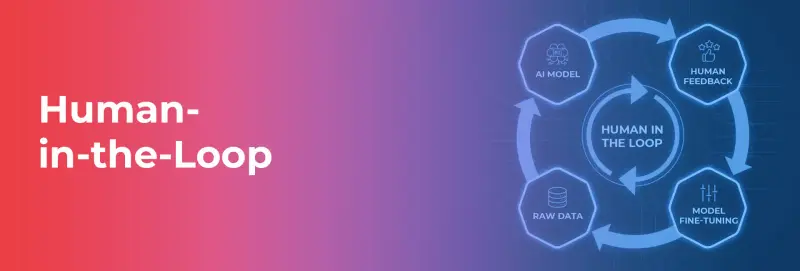
In an autonomous hiring system, AI handles discovery, pattern recognition, and signal aggregation. It observes, surfaces, and suggests. But it never decides. The decision — whether to engage a candidate, whether to move forward, whether a match is right — always belongs to a human.
This division of labor matters because hiring decisions are consequential. They affect careers, families, and livelihoods. Delegating these decisions to an algorithm — no matter how sophisticated — removes accountability from the process. In an autonomous system, accountability always has a human owner.
Recruiters in this model become curators rather than processors. They validate AI-surfaced matches using contextual judgment that no algorithm can replicate: cultural nuance, team dynamics, career trajectory fit, and the intangible signals that emerge in human conversation. They protect the candidate experience by ensuring that every interaction is thoughtful, respectful, and transparent.
Why autonomous hiring reduces bias without eliminating humans from the loop
Bias in hiring is often framed as a data problem — clean the training data and the bias disappears. This framing is dangerously incomplete. Bias in hiring emerges from multiple sources: incentive structures, feedback loops, proxy variables, over-automation, and historical inequities baked into the systems we have been using for decades.
Autonomous Hiring Intelligence mitigates bias through architectural choices, not cosmetic fixes:
It avoids opaque scoring. When a candidate is surfaced, the system can explain why — what signals contributed to the match, what factors were considered, and what was not used. There is no hidden composite score that collapses a human being into a number.
It uses multiple independent signals rather than relying on a single proxy. Resume-based hiring over-indexes on pedigree — school names, employer brands, keyword density. Signal-based matching distributes the evaluation across trajectory, context, skill, and engagement, reducing the influence of any single biased variable.
It preserves human review at every decision point. AI proposes. Humans decide. Candidates choose. This three-way accountability structure ensures that no algorithmic output becomes an irreversible career outcome.
It allows candidate agency. Candidates are not passive subjects being evaluated without their knowledge — they are active participants who control their data, their visibility, and their engagement.
Bias prevention in autonomous hiring is architectural, not cosmetic. It is not a feature that can be toggled on or off. It is embedded in the design of the system itself.
Scenario: A Series B SaaS company in Bangalore needs a senior ML engineer.
Under traditional hiring, the process begins with a job posting on three platforms. Within a week, 340 applications arrive. The recruiter spends 12 hours filtering resumes, rejecting 290 based on keyword criteria. Of the remaining 50, 15 respond to outreach. Eight complete a first-round screen. Three make it to final interviews. One is hired — 47 days after the job was posted, at a cost of approximately ₹4.2 lakh in recruiter time, job-board fees, and interview coordination.
Under Autonomous Hiring Intelligence, the system has been running continuously. Before the hiring need was formally articulated, the platform had already identified 12 candidates whose trajectory signals — progression from classical ML to production ML systems, experience in B2B SaaS environments, and active engagement with relevant opportunities — aligned with the team’s context. When the hiring manager confirms the need, the recruiter reviews the surfaced matches, validates fit through contextual judgment, and initiates conversations with 5 candidates. Two progress to final interviews. One accepts — 19 days from need-to-hire, with no job posting, no application flood, and no algorithmic rejection of the other 338 people who would have applied and been silently discarded.
The difference is not marginal. It is structural.
FAQ
What is autonomous hiring intelligence?
Autonomous Hiring Intelligence is a category of recruitment infrastructure that continuously discovers talent and opportunities through behavioral, contextual, and trajectory signals — without requiring applications, scoring, or scraping. It operates as a connected intelligence layer across organizations, using consent-driven data and human-accountable decision-making. Unlike an ATS or a job board, it runs continuously in the background, surfacing alignment between people and opportunities before a job posting is ever created.
How is autonomous hiring different from AI recruiting tools?
Most AI recruiting tools automate parts of the traditional process — faster resume screening, smarter keyword matching, AI-written job descriptions. They make the existing system more efficient, but they do not change its architecture. Autonomous hiring replaces the architecture itself. There are no applications, no resume filters, no candidate rankings. Instead, the system uses multiple independent signals to discover alignment, with all decisions remaining in human hands.
Does autonomous hiring replace recruiters?
No. Autonomous hiring is designed to elevate recruiters, not eliminate them. AI handles the high-volume, low-judgment work — discovery, pattern recognition, and signal aggregation. Recruiters focus on the high-value, high-judgment work — contextual validation, candidate experience, and decision ownership. In this model, recruiters become curators rather than processors.
What does “consent-driven” mean in hiring data?
Consent-driven means every piece of candidate data in the system is explicitly provided by the candidate for the specific purpose of being discovered for relevant opportunities. It is not scraped from LinkedIn, GitHub, or other public platforms without awareness. Candidates control their data, their visibility, and their participation — and can update, pause, or exit at any time.
Why does autonomous hiring refuse to rank candidates?
Ranking collapses nuance. It reduces a human being — with unique context, trajectory, and potential — to a single number. Rankings create false objectivity, encourage bias, and remove accountability from decision-makers. Autonomous hiring surfaces matches instead — showing why a candidate may align with an opportunity, without placing them on a leaderboard against other humans.
Is autonomous hiring only for tech roles?
The infrastructure is role-agnostic, but early implementations focus on domains where signal density is highest — software engineering, product management, AI and ML, and data science. As the system accumulates signals across more domains, it will expand to cover a broader range of roles and industries.
How does autonomous hiring reduce bias?
It reduces bias through architectural design, not data cleaning alone. It avoids opaque scoring, uses multiple independent signals instead of single proxies like resumes, preserves human review at every decision point, and gives candidates agency over their own data and participation. Bias prevention is built into the system structure, not added as a feature after the fact.
How is candidate privacy protected in an autonomous hiring system?
Privacy is protected through consent-driven architecture. All data is explicitly provided, purpose-bound, and user-controlled. No data is scraped from public sources without awareness. Candidates can update their information, control who sees it, pause participation, or delete their data entirely at any time. Consent is treated as a foundational contract, not a compliance checkbox.